
Jesus and His Cross

Sheep Without a Shepherd: Reflections on the Readings for the 11th Sunday in Ordinary Time, Cycle A


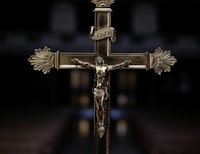
Photo by Andrea Lightfoot on Unsplash
If you haven’t already read the readings you can find them here.
Exodus 19:2-6a
Psalm 100
Romans 5:6-11
Matthew 9:36-10:8
Jesus was going about the region of Galilee healing and teaching. People were seeking Him out, bringing others for healing, and He was forgiving sins. He is the Good Shepherd and so when He saw the crowds, He looked on them with compassion, because they were like sheep without a shepherd.
We can draw a comparison between Jesus as the Good Shepherd and God the Father in the first reading who, after leading the Israelites out of Egypt, tells Moses to speak to the people about His adoption of them as His “special possession, dearer to me than all other people, though all the earth is mine.” In later books of the bible (especially in the prophets) we will hear about God shepherding His people, including prophecies about the coming of Jesus.
The scene is the Sinai desert, and Israel is encamped in front of the mountain (Sinai). It is about three months after the Passover, when they left Egypt. Today’s reading is about God preparing the people to meet Him (although only Moses will go up the mountain) and receive His covenant, the Ten Commandments (Decalogue). To begin with, God tells Moses to remind them how He saved the people, how He treated the Egyptians, and bore the people “on Eagles’ wings,” bringing them to the mountain.
A key phrase in this reading is, “if you hearken to my voice and keep my covenant.” The Ignatius Catholic Study Bible (ICSB) explains: “The covenant proposal is conditional. To experience its blessings and benefits, Israel must adhere to the covenant as given in the Decalogue and the Covenant Code (chaps. 20-23).” As we will see reading through the Old Testament, Israel’s problems always arose when they turned away from God and His covenant in a continuous cycle of disobedience and repentance, a lesson for us as well today.
We are sheep is the theme of the responsorial psalm. “We are his people: the sheep of his flock.” Its target is not exclusive to Israel. “Sing joyfully to the LORD, all you lands.” (Emphasis added.) Although we see denial by the Jews in much of the contentious dialogue between Jesus and the pharisees, the Gentiles have always had a role in God’s plan of salvation. The psalm includes a relation to the covenant: “Know that the Lord is God,” and “The LORD is good: his kindness endures forever, and his faithfulness to all generations.”
The reading from St. Paul’s letter to the Romans takes us to the other end of God’s plan of salvation, “But God proves his love for us in that while we were still sinners Christ died for us.” It is Christ’s death that reconciles mankind to God. However the key is the life of Christ: “Indeed, if, while we were enemies, we were reconciled to God through the death of his Son, how much more, once reconciled, will we be saved by his life.”
St. Paul prefaces this selection with encouragement about maintaining faith and hope despite our sufferings (afflictions): “Not only that, but we even boast of our afflictions, knowing that affliction produces endurance,and endurance, proven character, and proven character, hope, and hope does not disappoint, because the love of God has been poured out into our hearts through the holy Spirit that has been given to us.” This calls to mind Jesus’ warning us that, as His followers, we will suffer, “But he who endures to the end will be saved.” (Matthew 24:9-13.) In light of this, many saints and martyrs viewed their suffering as a gift, bringing them closer to Jesus.
The alleluia acclamation is key to Jesus’ entire message and comes from the beginning of His public ministry. “The kingdom of God is at hand. Repent and believe in the Gospel.” We are all called to follow Jesus, but following Jesus means we need to acknowledge our sinfulness and repent. It is a call to change. If we aren’t changing, we are not following Jesus.
In today’s gospel excerpt we read, “At the sight of the crowds, Jesus’ heart was moved with pity for them because they were troubled and abandoned, like sheep without a shepherd.” That could easily describe the world today as well. We’ve seen an increase in the number of people who declare having no religious affiliation (the “nones”) and most faith groups have undergone a decline in numbers, particularly in the West. At the same time we have an increase in unrest, people are floundering, suicides have increased, the false pitfalls of social media and artificial intelligence continue to entrap many, especially young people, and real social intercourse is declining. Society sees euthanasia and abortion as solutions rather than symptoms of a problem. It’s like St. Augustine said, noticing that we are restless and uneasy in our own skins, “You have made us for yourself, O Lord, and our hearts are restless until they rest in you.”
The problem is the world as a whole is “looking for love in all the wrong places,” even though it is right in front of them. “God is love, and he who abides in love abides in God, and God abides in him.” (1 John 4:16) To address this issue Jesus “summoned his twelve disciples and gave them authority over unclean spirits to drive them out and to cure every disease and every illness.” The unclean spirits are ravaging today’s world and who has the authority to drive them out? The Catholic Church. Jesus’ sending out the apostles to “go to the lost sheep of Israel,” is akin to our call to repentance, confession, and penance. Even secular research firms (e.g., Pew Research) regularly find that those who practice their faith are happier, more stable, more engaged in life and living, and better adjusted than those who don’t practice, especially those without faith. Obviously there is something positive about following God and His commandments.
So why can’t people see this even in the face of the statistical evidence? One reason is pride. Our egos get in the way. We want freedom and we want it our way. We are worse than rebellious teenagers who regularly defy parental guidance (if they even have two parents). It’s like the guy who refuses to follow road signs (or ask for directions) because he “knows better” and can do it himself. Anyone (especially those of us who identify as engineers) who has tried to put together a bicycle or other gadget for his kids usually learns, when all else fails, follow the directions.
God has given us some pretty clear directions. He allows us to do our own thing, but He’s always there when we fall to help us back to the right way of living.
As Father Larry Richards tells us, “’I Did it My Way’ is the theme song of Hell.”
About the Author
Mr. Klocek is a retired Naval Officer, systems engineer, and physical scientist with over 30 years involvement in Catholic teaching in various parishes and a Fourth Degree Knight of Columbus and a member of St. Stephen Martyr Catholic Church in Chesapeake, VA. Visit his website: actuallycatholic.com
Recommended Stories
More Stories By Tom Klocek: