


The Tangible Pursuit For Freedom: Part I

Pride is a Mimicry of God
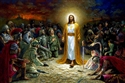

Photo by Christian Buehner on Unsplash
“The humble man conducts himself in the following manner: He delights in abasement, he does not attach his heart to transitory good things, he trusts wholly in God, and does not fear man.”
-Reverend Francis Spirago
Worldly men protect their earthly crowns and their structured thrones. Their greatest fear is to lose the reputation they have sculpted and the ground they have gained. Prideful simulation and emulation are the façade they develop to appear to be genuine even charitable, but when something or someone threatens their kingdom, they react in a way that seems fastidious, almost infantile, to suppress anything that detracts them from having the eternal spotlight. These men act in violence with the sole purpose of maintaining their constructed realms, anything to clothe their wicked and furtive intentions, fixed and highly determined to remain in power. Holy Scriptures diagnose these types of men by the crowns they attempt to protect. King Saul feared losing his kingship and public honor. He became consumed with jealousy while concerned and obsessed with keeping his crown rather than obeying the One who had given it. One can also observe King Herod the Great whose fear relied in losing earthly power by the prophecy of the Messiah’s birth. His failed conniving plan to trick the Magi into revealing Jesus’ location plunged his anger into killing the Holy Innocents of Israel. And then there’s Pilate, who rather than uphold justice and doing what he knew was right, condemned Jesus because he feared political consequences and public unrest. Therefore, Saul feared losing his throne; Herod feared losing his political power; Pilate feared losing Caesar’s favor. Now, which of these men and their crowns do you sometimes gravitate toward? What do you fear in losing the most?
Our Lord taught us that everything in this life is ephemeral. The Catechism of the Catholic Church (CCC) resounds this essential truth by asserting: “We learn humility by the consideration of the infinite majesty of God and the transitory nature of earthly things”[1]. Saint John Chrysostom further emphasizes this by stating: “The grave is the school wherein we learn humility.” If only men could realize that the vainglories they try to uphold, are the indiscriminate poisons which lead them to their own perils. Yet, “the humble man delights in abasement…he hides his talents, for he knows that what man reveals God conceals, and what man disclaims God proclaims”[2]. A good discerning soul can determine when a man has a genuine heart. Humility begets proclivity; they are reconciled in the tenors of steadfast love. “Humility leads to great sanctity, to exaltation, and to everlasting felicity”[3] while demarcating the qualities and virtues of an unpretentious man:
The humble man does not think himself better than others; he esteems others above himself (Phil. 2: 3). He does not publish the failings of others, he does not choose the highest place (Luke 14:10); on the contrary, he rejoices in being slighted, despised, humiliated, knowing that for this God will exalt him (Luke 14:10)[4].
No one should seek to earn earthly crowns without relying on God’s graces and charisms. The minute we impute ourselves with self-deserving gifts, we risk mimicking the hissing of the serpent’s rebellion-to usurp the place of God. St. Teresa of Ávila in her wisdom resonates this verity by acclaiming: “No one will do great things for God, who does not know that God has done great things for him.”
While Lucifer vociferates “Non Serviam”[5], impounding and cementing his rebellion against God, Saint Michael the Archangel deflects with obedience and proclaiming: “I will serve!”. The archangel’s sole name[6] affirms the truth of the Gospel in 1 Peter 5:5: “God resisteth the proud, but to the humble He giveth graces”. “Pride is a mimicry of God”[7].When we seek to protect the earthly crowns that makes us “honorable” before men, we are defying and rejecting the gifts God instilled in our hearts to perpetuate His kingdom on earth. And while pride slithers its way into our souls, it “makes itself manifest in dress” while “the proud dress above their station, they dress showily, in the latest fashion, and wear a great many unnecessary ornaments…the proud man despises the help and grace of God, and relies upon himself alone, trusting in the things of earth. He is his own deity”[8].
Let it be known to the humble man that the moment he perceives himself to have attained humility, he has thereby lost it. Let it be known to the humbled man that the second he perceives such a loss (that of humility) and returns to God, he has hence gained it. Let us resemble our Lord who gave his crown of gold and traded it for a crown of thorns, embracing the status of his Kingship, cloaked in the status of a servant[9]. Such a man, I will follow. Such a man, I will serve. All of my crowns, I surrender to you O Lord!
Even so, be watchful for the disposition of these men as Saint John of the Cross forewarns about:
Some men become indignant when others do not esteem their spiritual practices. This arises from secret self-esteem and pride, and they can never quite realize that they are steeped in pride up to their very eyes. For they think that a certain degree of recognition of their own wretchedness suffices, and, although they have this, they are full of secret self-esteem and self-satisfaction, taking more delight in their own spirituality and spiritual gifts than in those of others. They are like the Pharisee who gave thanks to God that he was not as other men, and that he practiced such and such virtues, whereat he was satisfied with himself and presume thereon.[10]
[1] CCC 2097
[2] “The Catechism Explained” by Rev. Francis Spirago (1899), p. 565
[3] CCC 526, 2097, 2706, 2778, 2785
[4] “The Catechism Explained” by Rev. Francis Spirago (1899), p. 565
[5] Translation from Latin: “I will not serve!”
[6] Michaele means “Who is like God?”
[7] “The Catechism Explained” by Rev. Francis Spirago (1899), p. 569
[8] “The Catechism Explained” by Rev. Francis Spirago (1899), p. 569-570
[9] Philippians 2: 6-8
[10] “Know Thyself: 100 Guided Meditations On Humility of Heart” by Rev. Cajetan Mary Da Bergamo (1905), p. 83
Copyright © 2026 Exsurge Domine. All rights reserved. If you thought of someone while reading this, bless them by sharing this article.
"Thou knowest, O my God, that it is neither from ambition nor the love of glory that I make war on the enemies of Thy name, but in order to strike terror into those that blaspheme it."
-St. Ferdinand III of Castile
About the Author
More by Exsurge Domine


