Reflection on the Thirteenth Sunday in Ordinary Time

An Understanding Heart: Reflections on the Readings for the Seventeenth Sunday in Ordinary Time, Cycle A


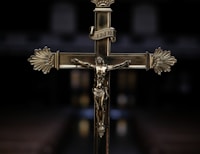
Photo by Riddhiman Bhowmik on Unsplash
If you haven’t already read the readings you can find them here.
1 Kings 3:5, 7-12
Psalm 119
Romans 8:28-30
Matthew 13:44-52
As we come to the end of Matthew’s retelling Jesus’ parables we hear the parables that are exclusive to Matthew’s gospel: the Wheat and the Weeds (last week’s gospel), the Hidden Treasure, the Pearl of Great Price, and the Dragnet. These parables contrast the goodness of heaven (treasure and pearl) with the failings of humanity and the judgment that awaits the wicked.
In the first reading we learn of God’s appearance to Solomon, David’s son and heir to the throne of Israel, asking Solomon what he would have God give him. In the missing verse, verse 6, Solomon acknowledges the grace and mercy which God had bestowed on David, and which now extends to his son (Solomon). Solomon considers himself as a “mere youth” (i.e., a child). He is referring, not to his age, but to his life experience. Like the gospel acclamation, God reveals the mysteries to children. The Ignatius Catholic Study Bible (ICSB) notes: “Solomon humbly recognizes his inability to govern the Lord’s people without the Lord’s help.” He’s off to a good start but we know it doesn’t end well. “Today’s success and righteousness is no guarantee of tomorrow’s faithfulness.” (Bill Newton, Endure: A Christian Man’s Guide to Finishing Well.)
This is a situation many of us have faced, either in our friends, our families, or even, as in my case for fourteen years, ourselves. We go to Christian formation classes, receive the sacraments, and then become lax in our practice of the faith. Some continue to go to Mass weekly, but many fall away completely, even going so far as becoming atheists. So, too, Solomon fell away, obtaining 700 wives and 300 concubines, who eventually had him worshipping false gods and idols, resulting in the people falling away from God.
The responsorial psalm takes us back to God. With a little understanding we see that God’s laws are for our own good. Thus the psalmist says, “Lord, I love your commands.” We see throughout the Old Testament that when Israel followed the Lord’s commandments things went well for them and when they disobeyed God, things fell apart. The same is true for us. We live in a world that has forsaken God and the chaos and, in particular, the violence and hatred we see is a result. Our duty is to follow the Lord and then we will learn, as the psalmist says, “The revelation of your words sheds light, giving understanding to the simple.” This is the theme of the past few weeks, as well as this week, when we listen to Jesus’ teaching through parables.
St. Paul’s letter to the Romans also sheds light on this subject. “We know that all things work for good for those who love God, who are called according to his purpose.” If we follow the Lord and His commandments things will eventually work out for our good. Our ultimate goal is Heaven, to “live in the House of the Lord forever.” If we are conformed to the image of God’s only Son, then we will receive what He promised us. Thus we must live a life modeled on Christ, being adopted brothers and sisters.
As we come to the gospel reading, the gospel acclamation reminds us that we are to receive God’s word as children of faith. We tend to overthink what we hear and try to put our own spin on it rather than listen to God’s word with open hearts and minds. So, open your heart to the gospel, today and every day.
Today we close out chapter thirteen of Matthew’s gospel, the chapter covering most of Jesus’ parables. And the three we hear today are as important as any of the others. As usual, I hope your parish will cover all three and not opt for the shorter version.
As in last week’s selections, Jesus begins His teaching with “the Kingdom of Heaven is like ...” Notice He refers to Heaven as a Kingdom (of which He is King). We sometimes seem to think that God’s word is negotiable, going so far as to think hell doesn’t exist or that sin can be defined by the “spirit of the times,” also sometimes called zeitgeist. That’s not how a kingdom works. It’s not a democracy. God’s reign is absolute.
The two main themes of these three parables are the inestimable value of Heaven and a life with God versus the tragedy of Hell, “the fiery furnace, where there will be wailing and grinding of teeth.” Recall He used that phrase in last week’s selection as well. Notice that in the Dragnet parable, Jesus says of the net cast into the sea (i.e., the world), that it “collects fish of every kind,” in other words the whole world. The theme of this parable must have had a particular impact on the apostles as many of them were fishermen and Jesus told them that they would become “fishers of men.”
Thus we understand that everyone, Christian or otherwise, will be judged at the end of the age. And, like the weeds and the wheat from last week, the wicked will be separated out and thrown into the fiery furnace of Hell.
This also underscores what Dr. Peter Kreeft says in his book, Because God is Real, “This does not mean that only Christians can be saved. But it means that when anyone is saved, it is Christ who saves him. … Christians don’t claim to be the only ones who are saved. But they do claim that Jesus is the only Savior ...”
As for the inestimable value of Heaven, emphasized in the first two parables, the way we attain to Heaven is by surrendering ourselves to God and His will, willing to give up the earthly attachments and materialism we have built up during our lives. This does not mean that worldly goods are evil, only that when our attachment to them separates us from God our quest for the kingdom is put in jeopardy.
We need to ask ourselves what earthly attachments are keeping us from Jesus. What are the hidden idols that we cannot seem to do without. How can we get the help we need to change. The Catechism tells us, “Jesus calls to conversion” (1427). This is the message in the New Testament. It builds on the experiences of the Old Testament. We need to make a commitment to change. And we can’t do it alone; we need Jesus’ help. And we get that through prayer. Mass is the greatest form of prayer followed by adoration. Praying in the company of the Blessed Sacrament is an excellent way to obtain the help and the grace we need to sustain our supernatural lives and bear the crosses of this material life.
About the Author
More by Tom Klocek