


Laying Stones

A Woman, Body and Soul: The Assumption and the Meaning of Womanhood
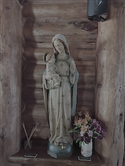

This weekend the Church celebrated the Assumption of the Blessed Virgin Mary. Before sharing my thoughts, I want to explain briefly what this feast commemorates.
The Catholic Church teaches that, at the completion of her earthly life, Mary was assumed, body and soul, into heavenly glory. Eastern Orthodox Christians celebrate the closely related Feast of the Dormition, honoring Mary’s “falling asleep” and bodily glorification. Mary did not ascend into Heaven by her own power, as Christ did. She was assumed by the power and grace of God.
As a recovering Protestant, this was initially a strange teaching for me to accept. It is not stated explicitly in Scripture, and it was far removed from anything I had been taught. Yet the more I studied the early Church and prayed about it, the less unreasonable it seemed. This is not intended to be a scholarly defense of the Assumption. These are simply two of the considerations that helped me accept it.
The absence of bodily relics of Mary is worth noting.
From the earliest centuries, Christians carefully preserved the tombs and relics of the apostles, martyrs, and saints. St. Teresa of Avila, for example, has body parts all over Christendom. St. Francis's body has been carefully guarded to keep this act from happening. Tradition even preserves the Holy House of Loreto, Italy which is believed to contain stones from Mary’s home in Nazareth. They were brought over to save them from destruction from war. Christians have also long venerated locations associated with the end of Mary’s earthly life, including the traditional Tomb of the Virgin in Jerusalem. Yet no church has ever credibly claimed to possess Mary’s bodily remains. If her body had remained in a grave, surely her relics would have become some of the most treasured in all Christendom. A magnificent church likely would have been built over her remains, or her relics would have been preserved and distributed, as happened with so many other saints. The absence of Mary’s bodily relics does not prove the Assumption by itself, but within the practices of the early Church, that absence is difficult to ignore.
Scripture already shows us that God can take a human person from earthly life in an extraordinary way.
Genesis tells us that Enoch “walked with God; and he was not, for God took him” (Genesis 5:24). We take this to mean that God took him up in glory. Second Kings tells us that Elijah was taken up in a whirlwind (2 Kings 2:11). He only proclaimed the Messiah's return. He did not birth Him. If I could accept that God granted such an extraordinary end to Enoch and Elijah, why was it impossible to believe that He might grant a unique privilege to the woman who carried the Incarnate Word within her body, gave birth to Him, raised Him, followed Him, and remained beside Him at the Cross? These considerations did not establish the dogma on their own, but they removed many of the obstacles that had made it seem impossible to me. Eventually, I came to accept the Assumption just as I accepted the biblical accounts of Enoch and Elijah, not because I understood every mystery surrounding them, but because nothing about them exceeds the power of God.
That brings me to what has been on my mind today.
The Assumption makes a profound declaration about the human body, and particularly about the body of a woman. Mary’s body was not incidental to God’s plan.
Within her body, Christ received His human nature.
Through her body, she carried, nurtured, and gave birth to the Savior of the world.
At the end of her earthly life, that body was not discarded as something meaningless.
It was glorified.
On a feast celebrating a woman taken body and soul into Heaven, I cannot help but consider how confused our culture has become about the meaning of womanhood. I am a woman: a mother, wife, daughter, sister, and aunt. These are not merely labels attached to me. They describe relationships that have shaped who I am and taught me something about the nature of womanhood. Since coming to Catholicism, I have begun to see certain things differently. The Catholic faith has taught me that my body is neither a prison nor a costume. It is not an unfortunate biological limitation that must be overcome before I can be equal to a man. My body is part of the person God created me to be.
There has been an attack upon womanhood from the beginning.
This does not mean that Eve alone was responsible for the Fall; Adam sinned with her and then blamed her for his own disobedience. Rather, Genesis reveals an attack upon God’s created order, upon the relationship between man and woman, upon human trust, and upon the woman through whom new life enters the world. God did not answer this attack by bypassing woman. He answered it through another woman.
Where Eve distrusted, Mary trusted.
Where sin brought death into the world, Mary freely received the One who would conquer death.
Her response to Gabriel, “Let it be done to me according to your word,” was not passive submission or mindless obedience. It was a courageous and freely given yes to God.
Mary did not become powerful by rejecting her womanhood. God worked through it.
Throughout history, women have endured genuine injustice. They have been denied education, legal protection, property rights, political participation, and recognition of their intellectual and spiritual gifts. Women have been exploited, abused, silenced, and treated as though they were inferior to men. Those wrongs needed to be confronted, and we should be grateful to the women who fought against them. But not every movement that claims to liberate women actually honors them.
In a tragic irony, some of the same movements that claimed to defend women’s rights have gradually stripped the meaning of being a woman from us.
At some point, equality stopped meaning that men and women possess equal human dignity. Instead, it began to mean that women must become functionally interchangeable with men. Our bodies, fertility, and capacity for motherhood came to be treated as obstacles standing between us and freedom.
Contraception promised freedom from our fertility.
Abortion promised freedom from the consequences of conception.
Women were told that we could compete equally with men only if we gained the ability to live as though pregnancy, motherhood, and the needs of children did not exist.
The burden of changing society to support women and children was replaced by the demand that women change their bodies.
Fertility became a medical problem to suppress.
Pregnancy became an inconvenience.
Motherhood became unpaid labor.
Dependence became weakness.
The unborn child became a competitor for the mother’s freedom.
Now we have reached a point at which the very word woman has become difficult for our culture to define.
We are told that the female body does not determine whether someone is a woman, but that clothing, appearance, feelings, and social stereotypes somehow can. Women must once again fight for spaces of their own and defend the relevance of biological sex in athletic competitions created precisely because male and female bodies are not interchangeable. Recognizing this reality is not hatred. Every human person possesses dignity and should be treated with compassion. But compassion does not require us to deny the meaning of the body. We cannot protect women while simultaneously claiming that the category of woman has no objective connection to being female.
The confusion reaches beyond language and athletics. It has also changed the way we speak about motherhood.
When a mother kills her children, public discussion can become so centered upon her suffering that the children themselves almost disappear. Mental illness is real, and it can profoundly affect a person’s actions and culpability. Women experiencing psychiatric crises deserve treatment, protection, and compassion. Acknowledging those facts is not wrong. However, compassion for a suffering mother cannot require silence about her children. We should be capable of recognizing both the seriousness of mental illness and the immeasurable value of the lives that were lost. The children are not merely evidence of how heavily motherhood burdened their mother. They are persons. They are victims. Their lives matter too.
When our culture has spent decades describing motherhood primarily as a burden, limitation, or instrument of oppression, it becomes increasingly difficult to speak about maternal responsibility. We explain every failure surrounding a woman, and sometimes there are many, while hesitating to acknowledge that motherhood also carries sacred obligations. Feminism has rightly asked society to consider what it owes women. It has not always been willing to ask what women may owe to others, especially their own children. True freedom cannot mean freedom from every person who needs us. If it did, none of us could live as Christians. The Christian life is built upon sacrificial love: love that accepts responsibility, remains when leaving would be easier, and recognizes another person’s life as a gift rather than an obstacle. This does not mean that Catholicism reduces every woman to marriage and biological motherhood. The Church honors married women, single women, widows, consecrated religious, intellectuals, teachers, missionaries, mystics, martyrs, and saints. A woman’s dignity does not depend upon whether she marries or gives birth.
St. Thérèse of Lisieux never became a biological mother, yet she became a spiritual mother to countless souls.
St. Teresa of Ávila reformed religious life, founded convents, wrote works of theology, and became a Doctor of the Church.
St. Catherine of Siena advised popes.
St. Joan of Arc led soldiers.
Their lives were radically different, but none of these women needed to reject her womanhood to fulfill God’s calling.
The Catholic understanding of womanhood is therefore much larger than a list of domestic duties. It recognizes an embodied reality and a spiritual vocation. Womanhood is neither a costume nor a collection of stereotypes. It is not defined by whether a woman wears dresses, enjoys cooking, behaves gently, becomes a mother, or fits a particular personality type. A woman can be strong or gentle, outspoken or quiet, intellectual or artistic, married or unmarried. None of those qualities makes her more or less of a woman.
Her womanhood begins with the reality that God created her female, body and soul, and called that creation good.
Mary demonstrates this truth perfectly. Her greatness does not come merely from the biological fact that she gave birth. She is blessed because she trusted God and freely cooperated with His grace. God did not use her soul while treating her body as irrelevant. He chose her whole person. The Word became flesh within her. She carried Him, gave birth to Him, nursed Him, raised Him, followed Him, and stood beside His Cross.
Then, at the completion of her earthly life, God assumed that same woman, body and soul, into heavenly glory.
That is what makes the Assumption so meaningful in our present moment.
The world tells women that freedom requires escaping the meaning of their bodies. The Assumption tells us that the female body is capable of glory.
The world tells us that motherhood diminishes a woman. Mary shows us that sacrificial motherhood can participate in the redemption of the world.
The world tells us that equality requires sameness. Mary shows us that a woman does not need to become like a man in order to possess immeasurable dignity, courage, influence, and strength.
The world tells us that the body is whatever we decide it is. Mary’s Assumption proclaims that the body is part of the person God created and intends to redeem.
I want a world in which a woman does not have to deny her body for her voice to matter. I want girls to know that equality does not require imitating men, that fertility is not a disease, that motherhood is not erasure, and that dependence upon others is not always weakness. I want women facing unexpected pregnancies to receive more than the cold assurance that they can end the life of their child. I want them to receive material help, medical care, protection, friendship, and a community willing to remain after the baby is born. I want mothers to be valued for work that cannot always be measured by a paycheck. I want women who do not marry or have children to know that their lives remain fruitful and that spiritual motherhood is real.
Above all, I want us to remember that our bodies are not mistakes.
This weekend, during the Feast of the Assumption, the Church directed our attention toward Heaven, and there, body and soul, is a woman.
Mary does not ask us to worship her. She does what she has always done: she points us toward her Son. In glorifying His mother, Christ also reveals something about His intentions for us. The Assumption anticipates the resurrection promised to all who belong to Him. It reminds us that salvation is not an escape from the body but its redemption.
St. John Paul II called for a “new feminism, ”one that rejects domination without rejecting sexual difference and defends women without sacrificing their children. Such a feminism would recognize that women need genuine support: protection from violence, respect in the workplace, help in times of crisis, recognition of caregiving, and communities that do not abandon mothers once their children are born.
The world does not honor women by making womanhood undefinable. It does not liberate us by teaching us to fear our fertility, resent our children, or escape the meaning of our bodies.
I am a woman: a mother, wife, daughter, sister, and aunt. I am not a lesser man, a collection of stereotypes, or an identity detached from the body God gave me. I am a daughter of God, created intentionally and called to love sacrificially. On this feast, I look to Mary and remember that womanhood is not something from which I need to be liberated. It is a gift destined for glory.
About the Author
More by AF Moffitt


