



Corpus Christi: A Cross in the Darkness

Roses and Rhinestones

I always get the best ideas late into the night, in the middle of getting ready for bed. Here I am, after midnight, thinking about the events that took place today. August 25, 2026. It is hard to even type the words. Today, Dolly Parton passed away. Today was hard for a lot of people.
There is one thing that every East Tennessean has in common, a love for Dolly Parton. Even if they do not enjoy country music, I never met anyone in Appalachia that did not love Dolly. I was born and raised there and lived there for 36 years. Now that I am in Montana, that love never goes away. I explained to one of my friends, while sobbing, that it feels like a great aunt has passed away. You never get to see the aunt, but you love everything about her. She was always kind to you and sends you books in the mail. That is the best description of the sadness we are going through. I have only met one person in my life that did not like Dolly. “I can’t stand her,” was the exact statement. So, I made a joke that it was blasphemy to say that to an East Tennessean and carried on. Inside, I was offended. It really did feel like someone insulted a family member. What I really wanted to ask was if they did not like her, or if they did not appreciate joy? Why would someone full of joy annoy them?
As I was sharing on social media my thoughts, I had a moment of realization and needed to share. I have never seen this comparison before, so maybe I am the first, or maybe not. Just to clarify, Dolly was not Catholic. She was a Christian and was Protestant. She was raised up in the same denomination that I attended for much of my life. Her faith in Jesus drove every decision she made for others. There is no doubt in my mind that she will get to heaven.
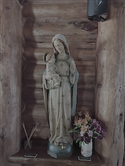
As I was thinking of all the good she has done for people, and thinking about how much we don’t know about the good things she has done for people outside of the spotlight, I thought of the Little Flower. I do not know if Dolly knew anything about the Little Flower, our lovely St. Therese. But I thought that Dolly would have loved her.
St. Thérèse stripped everything down: hiddenness, poverty, little sacrifices, becoming small. Dolly does almost the reverse aesthetically: big hair, glitter, rhinestones, color, performance. Underneath all of that, there is a surprisingly similar insistence that worth isn't determined by appearances, wealth, or worldly importance. At first, the comparison sounds almost ridiculous. One was a cloistered Carmelite nun who died at twenty-four.
The other became an icon of country music, known for enormous blonde hair, sequins, high heels, and rhinestones. Yet both women, in very different ways, understood something deeply important about worth.
Dolly Parton once said, “A rhinestone shines just as good as a diamond.” The moment I read that, I thought of St. Thérèse. Near the beginning of Story of a Soul, Thérèse describes souls as flowers in God’s garden. Some are magnificent roses and lilies. Others are tiny violets and daisies. The smaller flower is not a failure because it is not a rose. Its beauty comes from being exactly what God created it to be. Thérèse writes that if every flower wanted to be a rose, spring would lose its loveliness.
And then there is Dolly’s rhinestones. A rhinestone is not a diamond. It does not have the same monetary value. It is not rare. No jeweler is going to mistake one for the other. And yet, when the light hits it, it shines. Maybe we spend far too much of our lives trying to become diamonds when God never asked us to be anything other than the rhinestone He created.
St. Thérèse called herself the Little Flower. She knew she was not capable of doing many of the great things she admired in other saints. She wanted to be a missionary. She wanted to be a martyr. She wanted to serve God in seemingly every possible vocation. But her actual life was extraordinarily small by worldly standards.
She entered Carmel.
She prayed.
She performed ordinary chores.
She lived among the same small group of women.
She endured irritations, misunderstandings, illness, and hidden sacrifices.
There were no enormous crowds listening to her preach.
There were no great institutions bearing her name during her lifetime.
There was very little that the world would have called impressive.
Thérèse came to understand that greatness in the eyes of God did not require doing visibly great things. Her Little Way was built upon doing small things with extraordinary love. She did not have to become the rose. She simply had to be the little flower God had planted.
And then there is Dolly.
Dolly Parton has never pretended to be understated. Her appearance is deliberately excessive. The hair is higher. The heels are taller. The clothes sparkle more than necessary. She has joked about her artificial appearance for decades. But there has always been something wonderfully self-aware about it. Dolly knows the rhinestone is not a diamond. She just does not seem particularly bothered by that.
“A rhinestone shines just as good as a diamond.”
There is something almost Theresian about that statement, even though it comes from a completely different Christian world. Dolly grew up in the Christianity of the Appalachian South. Thérèse grew up in nineteenth-century Catholic France and entered a Carmelite monastery. Their theology, vocation, and circumstances were profoundly different. I am not suggesting that Dolly Parton is another St. Thérèse. But sometimes two people living in entirely different worlds can stumble upon the same truth.
You do not become valuable by becoming something else.
Comparison seems almost unavoidable.
Someone is prettier.
Someone is more successful.
Someone has more money.
Someone has a bigger home.
Someone has a more impressive career.
Someone is a better mother.
Someone prays more faithfully.
Someone knows more theology.
Someone appears holier.
Someone seems to have figured out a life that still feels confusing to us.
We look around God's garden and begin assigning value to the flowers.
Rose: important.
Lily: impressive.
Violet: ordinary.
Daisy: forgettable.
But God never created such a hierarchy. Thérèse understood that. She realized that the beauty of God's garden comes precisely from its variety. A garden containing nothing but roses would actually be missing something. The violet contributes something the rose cannot. The daisy contributes something the lily cannot. Their smallness is not a defect. And perhaps the same is true of Dolly's rhinestone. The problem begins when the rhinestone becomes ashamed that it is not a diamond.
I think we sometimes misunderstand humility. We imagine humility means making ourselves smaller by denying whatever is good in us. We dismiss our gifts. We criticize our appearance. We minimize our accomplishments. We convince ourselves that being holy requires becoming a completely different person. But Thérèse offers another understanding. Humility is seeing ourselves truthfully. We are creatures. God is God. Whatever gifts we possess came first from Him. The goal, then, is not to erase ourselves. It is to give ourselves back to Him. Thérèse wrote that perfection consists in doing God's will and being what He wills us to be. That is deceptively difficult. Because most of us are remarkably willing to be what God wants us to be, as long as He wants us to be the person we had in mind.
We want to be the rose.
We want to be the diamond.
And sometimes God says:
No.
I made you a violet.
I made you a rhinestone.
Now shine.
This is where Dolly's quote becomes more than a clever saying.
“A rhinestone shines just as good as a diamond.”
A rhinestone does not create its own light. It reflects it. And suddenly the comparison becomes profoundly Christian. We are not the source of the light. Christ is. Our purpose is not to convince the world that we are precious enough, successful enough, beautiful enough, accomplished enough, or holy enough. Our purpose is to reflect Him. Perhaps that is why some of the smallest acts in our lives may matter far more than we realize.
Making dinner for your family.
Listening patiently when you are tired.
Praying for someone who has hurt you.
Changing another diaper.
Driving another child to practice.
Calling someone who is lonely.
Choosing not to say the cruel thing that entered your mind.
Getting up and trying again after you failed yesterday.
No one writes biographies about most of these moments. There are no medals for them. Nobody applauds. They are tiny flowers. Little rhinestones. But love changes their value. Thérèse understood that holiness could be hidden inside ordinary things because love transforms them. The action may remain small. The love does not. There is something I love about putting these two images beside each other.
Thérèse gives us the garden.
Dolly gives us the rhinestone.
The little violet looks up at the rose and wonders whether it matters.
The rhinestone sits beside the diamond and wonders whether it is valuable. And both receive essentially the same answer.
You were never asked to become the other one.
The violet glorifies God by becoming fully a violet.
The rhinestone does not need to become a diamond before it can catch the light.
Perhaps we do not need to become the person we imagine we should have been before God can use us either. Maybe holiness begins when we finally stop fighting the particular way God created us.
Our personality.
Our gifts.
Our limitations.
Our circumstances.
Our hidden lives.
Our ordinary responsibilities.
Even the parts of ourselves that seem far less impressive than what we see in someone else. St. Thérèse spent her life hidden behind the walls of Carmel and became one of the most beloved saints in the Church. Dolly Parton walked onto stages covered in rhinestones and somehow made the rhinestone itself a declaration that something does not need to be expensive to shine.
Roses and rhinestones.
A Carmelite monastery and an Appalachian stage.
Thérèse’s Little Way belonged to the cloister. Dolly’s could never look the same. One washed dishes and folded laundry behind the walls of Carmel; the other wrote songs, stood beneath stage lights, built businesses, and gave away books by the millions. But perhaps the resemblance is not found in what they did. It is found in the question beneath it: What can I do with what I have been given to love another person? Thérèse had small daily sacrifices. Dolly had songs, money, influence, and an enormous platform. Neither needed someone else’s vocation in order to make her own life an offering.
Thérèse had her little flowers.
Dolly had her rhinestones.
And both, in their own way, understood that the smallest things can still catch the Light.
About the Author


