
The Adoration of the Blessed Sacrament – Going Beyond the Mass

My Personal Links to St. Patrick and St. Columba

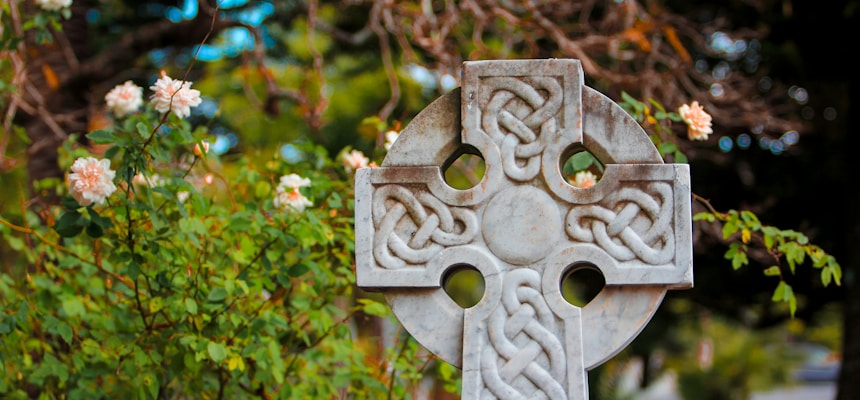
Photo by Marcus Dall Col on Unsplash
When I moved to Brazil I was struck by the number of well known people who publicly declared a personal devotion to a particular saint. Our Lady of Aparecida, Brazil´s patron saint, Our Lady of Fatima in Portugal and St George were among the most common. Many of these devotees were obviously sincere while others, I suspected, were attention grabbing “celebrities” – famous for being famous - who would do anything to attract publicity.
However, the most surprising person for me was a dynamic businessman called Abílio Diniz, who ran the biggest supermarket chain in Brazil, Pão de Açúcar, and was a devotee of St. Rita of Cascia and Our Lady of Fatima. He would go to mass every month in the church in São Paulo dedicated to St. Rita of Cascia and often described her and Our Lady of Fatima as one of his aunts in Europe. In 1989 Diniz was kidnapped and held for six days before being freed, thanks to the carelessness of the kidnappers and the intermediation of the then Archbishop of São Paulo, Cardinal Paulo Everisto Arnes. One of Diniz´s first acts after his release was to attend a thanksgiving mass. He obviously believed that he had some personal link with these two saints.
He was not alone. The Church has a long history of believers who dedicated themselves to certain saints such as the first martyrs and the practice was widespread in Mediterranean lands. However, nowadays this tradition is more associated with Latin American cultures. Various reasons have been put forward to explain this such as that saintly devotion was already part of indigenous cultures and later blended with the religious beliefs of African slaves. These cultures managed to graft parts of their beliefs onto Catholicism which became the official faith in Spanish and Portuguese colonies. This can be seen today in the cults of Our Lady of Guadalupe in Mexico or the African river goddess Yemanja in Brazil. There are also a number of “popular” saints who are not recognized by the Vatican such as Santa Muerte (St. Death) and Jesus Malverde in Mexico and Menina Izildinha in Brazil.
While musing on this I started thinking of my own culture and then it struck me that I myself was the living embodiment of a saintly cult. On paper my surname Fitzpatrick looks as if it combines the Norman-French “Fitz” (often used to describe the illegitimate offspring of Norman nobility) with the common Irish name Patrick. I had always thought my surname meant the “son of Patrick” and even wondered if I was descended from a Norman king whose descendants had crossed over to Ireland after conquering the English in 1066. I discovered later that this was almost certainly wrong and the blood that coursed through my veins was not as noble as I had hoped. While most “Fitz” suffixes like Fitzwilliam, Fitzgerald, Fitzsimmons etc. do have an Anglo-Norman origin, my name, Fitzpatrick, stems from the Gaelic name Mac Giolla Phádraig. According to the historical records the chief of the Mac Giolla Phádraig clan decided to throw his lot in with the Anglo-Norman conquerors in Ireland in the 16th century and changed the surname to make it sound more Norman. (This also allowed him to maintain control his lands in the Upper Ossory region.) By doing so he altered the impression of the name´s meaning because Mac Giolla Phádraig means “the devotee of the cult of St Patrick” and has nothing to do with being the son of Patrick.
While it was a bit disappointing to learn that a distant ancestor had betrayed our original name I was heartened to think that it showed a devotion to Ireland´s patron saint. Since St. Patrick was not even Irish but may have come from the west of Scotland, as I do, I was more than satisfied that I might be the personification of a devotee of a saint.
Another plus point was that one of my favorite saints is St. Columba who went to Scotland from Ireland about 60 years after St. Patrick´s death and settled on the little island of Iona which I visited some years ago. He founded a monastery there which became a springboard for monks to spread out across Scotland, the north of England and then onto Europe and convert pagans to Christianity. Without him and the Celtic Church Christianity would never have become a powerful force in northern and western Europe.
© 2026 John Brander Fitzpatrick
About the Author
More by John Brander Fitzpatrick


