
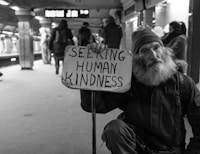
What are People Like Today?

Cognitive Behavioral Therapy Meets Catholicism

Photo by Igor Omilaev on Unsplash
Cognitive Behavioral Therapy Meets Catholicism:
CBT with the Cross, the Eucharist, the Rosary and Mass
Well, it’s not that we need therapy, just some friends, family members and God’s support will suffice. It is actually how CBT works.
Who cannot love the ‘Prayer of Our Daily Neglects’?
“Eternal Father, I offer you the Sacred Heart of Jesus, with all His love, sufferings, His merits.” Glory Be…”
First: “May the Sacred Heart of Jesus expiate all the sins I have committed this day and during my life. Glory Be…”
Second: “May the Sacred Heart of Jesus purify the good I have done badly this day and during all my life. Glory Be…”
Third: “May the Sacred Heart of Jesus supply for the good I ought to have done and that I have neglected this day and during all of my life. Glory Be…”
Cleaned, free, forgiven of all our mistakes and shortcomings, and ready to go ! True, we all sinned, we didn’t do as good as we should have, we neglected to do good when we should have, we all fall short of the Glory of God by our decisions to do badly, good or not good enough, some farther away than others.
Cognitive Behavioral Therapy [CBT] in brief is an approach to everyday thoughts, feelings and behaviors, with each influencing the other. As we emerge into all the situations of our lives, we create thoughts and interpretations, [accurate or inaccurate]; in turn, they have a bearing on our feelings or emotions [warranted or unwarranted]. Emotions depend on the interpretations. The response to our thoughts and emotions becomes behaviors. Behaviors too have a direct affect on both thoughts and feelings. The task then is to assess the proper interpretation, recognize the feeling or emotion, and respond accordingly according to the standards of our belief system. Simple, right?
Yes, there are consequences of our choices and behaviors that are life lasting, individually and socially. Our choices were made, behaviors followed, for good or bad. What do we do now? Hard to accept and so difficult for some, but as for the consequences, we can both bear and overcome them. How? Through Cognitive Behavioral Therapy and these anchors of Catholicism: The Cross, the Eucharist, the Rosary, the Mass.
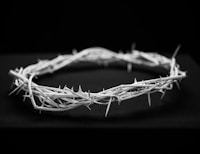
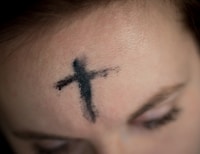
The Cross: As Catholic Christians, we are called to walk with Jesus and follow His way of the cross, not our way. It is Him acting and living in us. It is His cross that gives us the strength to struggle after Jesus. We gladly suffer our struggles to follow Jesus, a minuscule of his sufferings. And, if we persevere, we bear it all, do it through Him, knowing that no sin of ours is greater than His love for us. Our perspective and cognitve interpretations on matters and situations are bound in the cross of Christ.
The Eucharist: The mystery of the Holy Eucharist is the center of Catholic life. The actual presence of the body and blood of Christ is offered to each, and as we take the Holy Eucharist, we proclaim His resurrection until He returns. Our oneness with Him compels us to love Christ, love others, and proceed to serve the Lord. What more should we actually want in life? Let us be sure that better decisions and outcomes will result from it. Our behaviors become a result of the body and blood of Christ living within us.
The Rosary: Prayer of the Rosary allows us to meditate on the life of Christ. St. Josemaria Escriva’ calls praying the Rosary a continuous act of faith, hope, and love of adoration and reparation. It enables us to win in our interior struggles and to help others. Since we all have our individual paths to follow, the Holy Spirit will work in us, and we will see the fruits of our Prayer of the Rosary. Healthy feelings and emotions are maintained through a daily recitation of the Rosary.
The Mass: It is all here in the Mass: the Cross, the mercy of forgiveness, the life of Christ in the Gospel, and worship, putting it all together. Worship has emotional, spiritual, and practical benefits. And we only have to attend once a week. With the Mass we align ourselves with God, attain peace and guidance, and cultivate love and personal empowerment [His graces]. How’s that for enacting healthy behaviors? It strengthens faith, reinforces moral values, and provides a framework for living a meaningful, purpose-driven life. Mass nurtures spiritual intimacy, emotional well-being, and practical life alignment, offering both immediate peace and long-term fulfillment. We are transformed.
In sum, Cognitive Behavioral Therapy is about decision making. Our decisions are based on our beliefs, values, thoughts, emotions, and life circumstances. Connect that to living with Christ and in Christ, our struggle to do God’s will, not ours. Our will got us into this mess. WWJD? The practicing Catholic perseveres step by step, day by day, with the above in mind. That is the best CBT. What else is there but to do it?
Sources:
Anderson, Nick. “Cognitive Behavioral Therapy”
Enzler, Clarence. “Everyman’s Way of the Cross”
Relevant Radio. “Treasures of the Rosary”
Related Source:
Baglino, Michael J. 2023. More From a Florida Catholic. New York: Penguin Writers.
www.michaelbaglino.com/speaker
About the Author