

Does God love Satan?

Why Does Prayer Matter? A Catholic Answer for a Scientific Age


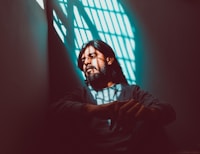
Photo by Humble Lamb on Unsplash
What if prayer isn't simply talking to an invisible God? What if it changes the person who prays—and what if the evidence from science gives us good reason to take that possibility seriously?
For a person who believes in Jesus Christ, prayer can feel as natural as breathing.
But for someone who doesn't believe in God, an obvious question remains:
Why pray at all?
If God cannot be seen under a microscope, measured with a machine, or detected by a scientific instrument, why spend time speaking to Him?
And perhaps an even harder question:
Does prayer actually do anything?
The Catholic answer is deeper than simply saying, "Prayer makes you feel better."
Catholicism teaches that prayer is a real relationship with a real Person: God Himself. But science also gives us interesting evidence that practices associated with prayer—attention, silence, meditation, gratitude, reflection, communal worship, and surrender—can have measurable effects on the human person.
Science cannot put God into a laboratory and prove or disprove Him.
But it can help us understand what happens when human beings pray.
And that gives us an important place to begin.
1. What Does the Catholic Church Mean by Prayer?
Prayer is sometimes imagined as asking God for things:
"God, please heal me."
"God, please give me this job."
"God, please protect my family."
Those prayers are certainly part of Christianity.
But Catholicism understands prayer as something much greater.
The Catechism of the Catholic Church describes prayer as the raising of the mind and heart to God. It calls Christian prayer a living relationship between the human person and God the Father, through Jesus Christ, in the Holy Spirit.
That distinction matters.
Prayer isn't fundamentally about manipulating God.
It isn't a spiritual vending machine.
It isn't a magical formula.
And it isn't simply positive thinking.
Prayer is relationship.
Think about a relationship with another human being.
You don't talk to someone you love because they are incapable of knowing anything unless you tell them. You talk because communication itself is part of the relationship.
The same idea applies to Catholic prayer.
Jesus Himself teaches His disciples to pray to the Father. In the Gospel of Matthew, Jesus even warns against treating prayer as a technique for producing a desired result. He teaches the Our Father, beginning with:
"Our Father in heaven, hallowed be your name."
Notice what comes first.
Not:
"Give me what I want."
But:
"Your will be done."
That is the heart of Christian prayer.
2. But Does Prayer Actually "Work"?
This is where the conversation becomes especially interesting.
If prayer means asking God to intervene in the physical world, we might expect science to be able to test it.
Researchers have actually attempted to do exactly that.
There have been randomized clinical trials and systematic reviews investigating intercessory prayer—praying for another person who may not even know that someone is praying for them.
The results are complicated.
And honesty matters.
Some studies have reported interesting or positive findings, while other studies have found no significant effect.
For example, a large randomized trial known as the STEP trial studied 1,802 patients undergoing coronary artery bypass surgery. Patients were divided into groups receiving intercessory prayer or not receiving it, with some patients also knowing with certainty whether they were being prayed for.
The researchers found that receiving intercessory prayer itself did not improve complication-free recovery.
A later Cochrane systematic review examined ten randomized studies involving 7,646 people and concluded that the evidence for intercessory prayer and health outcomes remained inconclusive.
So can we honestly say:
"Science has proven that praying to God physically heals people"?
No.
The evidence does not justify that claim.
And Catholics don't need to make it.
3. Science Cannot Put God in a Test Tube
There is an important philosophical problem here.
Suppose someone says:
"I'll believe in God if you can prove Him scientifically."
That sounds reasonable until we ask what science is actually designed to investigate.
Science investigates the physical universe through observation, measurement, experimentation, and testing.
But the Christian claim is that God is not simply another physical object inside the universe.
God isn't a physical particle hiding somewhere in space.
If God exists, He would be the Creator of the physical universe—not one more object inside it.
Therefore, the question of God's existence cannot be reduced to:
"Can we detect God with a machine?"
That's not necessarily the appropriate test.
We don't use a microscope to determine whether a mathematical theorem is true.
We don't use a thermometer to determine whether an argument is logically valid.
We don't use an MRI to determine whether a person loves another person.
Different questions require different forms of evidence.
This doesn't mean that belief in God is irrational or immune from evidence.
It means that the evidence for God is not going to look like a laboratory measurement of a physical object.
4. But Something Very Interesting Happens When Humans Pray
Here is where scientific research becomes relevant.
Prayer frequently involves practices such as:
sustained attention
silence
slow breathing
meditation
gratitude
reflection
confession
forgiveness
hope
surrender
communal participation
focusing attention on something larger than oneself
Many of these practices have been studied scientifically.
Research on meditation and mindfulness, for example, has found evidence of benefits for stress, anxiety, and depression, although the quality and consistency of studies varies depending on the practice and population studied. The National Center for Complementary and Integrative Health notes that research has found mindfulness-based approaches can improve anxiety and depression compared with no treatment, while also cautioning that the research has limitations.
This doesn't prove Christianity.
But it does challenge the idea that prayer is necessarily "doing nothing."
Something can happen inside a human being when that person becomes quiet, attentive, reflective, grateful, and focused.
And that matters.
5. Prayer Can Change the Person Who Prays
Imagine two people facing the same crisis.
One spends every waking moment thinking:
"I have to control this. I have to solve this. I have to make everything work."
The other says:
"I will do everything I can, but I am not God. I cannot control everything. I place this person, this situation, and my future into God's hands."
Those two people may face exactly the same external circumstances.
But internally, they are responding very differently.
This is one reason prayer matters even before we discuss supernatural intervention.
Prayer can interrupt the illusion that we are completely in control.
It can create space between an event and our reaction to it.
It can turn fear into reflection.
t can turn isolation into relationship.
It can turn gratitude into a habit.
It can turn suffering into something we consciously bring before God.
And Christianity goes further.
It says that the person we are speaking to is not imaginary.
God is listening.
6. "But Isn't Prayer Just Meditation?"
Not exactly.
This is one of the most important distinctions between Christian prayer and purely secular mindfulness.
Meditation can involve observing one's thoughts.
Prayer can involve that too.
But Christian prayer is ultimately relational.
A Christian isn't merely attempting to empty the mind.
A Christian is attempting to encounter God.
The Catechism identifies three major expressions of Christian prayer: vocal prayer, meditation, and contemplative prayer. Contemplative prayer is described as an attentive gaze toward Christ and an expression of silent love.
That means a Catholic might pray by:
saying the Rosary
reading Scripture
attending Mass
speaking honestly to God
sitting silently before the Blessed Sacrament
asking for forgiveness
thanking God
praying for another person
meditating on the life of Jesus
simply sitting quietly and saying, "Jesus, I am here."
The goal isn't merely relaxation.
The goal is communion.
7. What About Praying for Other People?
Catholicism places enormous importance on intercessory prayer.
Intercessory prayer means praying for someone else.
You might pray:
"Lord, help my mother."
"Jesus, heal my friend."
"Holy Spirit, guide my brother."
"Lord, help this person come to know You."
The Bible explicitly encourages Christians to pray for one another. The Letter of James connects prayer, healing, confession, and intercession, describing the prayer of a righteous person as powerful.
But once again, Christianity doesn't teach that prayer is a guaranteed mechanism for getting whatever we request.
Jesus Himself gives Christians the model:
"Your will be done."
That changes everything.
A prayer can be answered with:
Yes.
It can be answered with:
No.
It can be answered with:
Not yet.
And sometimes the answer may take a form we didn't expect.
Christian prayer therefore isn't about controlling God.
It is about trusting God.
8. So What About Miracles?
This is where Christianity makes a claim that science cannot simply settle.
Catholics believe miracles are possible because Catholics believe God exists and is capable of acting within His creation.
The Catholic Church does not teach that every healing is miraculous.
In fact, Catholic Christianity has always recognized ordinary means of healing: doctors, medicine, surgery, rest, nutrition, and other forms of care.
Prayer and medicine are not enemies.
A Catholic can pray:
"God, please heal me."
and then go to the doctor.
Those aren't contradictory actions.
In the Letter of James, the biblical account of prayer for the sick actually involves the elders of the Church praying and anointing the sick person.
Christianity therefore doesn't require us to reject medicine in favor of prayer.
It invites us to recognize that God can work through ordinary means as well as extraordinary ones.
9. What Science Can—and Cannot—Tell Us About Prayer
A useful way to think about the evidence is to separate three different questions.
Question 1: Does prayer have measurable effects on human beings?
There is evidence that some prayer-related and contemplative practices can affect psychological and subjective outcomes, although the research varies substantially in quality and the findings should not be exaggerated.
A systematic review examining prayer as an intervention for pain found that several studies reported potential benefits, while also calling for better-designed research.
A randomized trial published in 2026 also reported reductions in pain and anxiety following a brief Christian prayer intervention compared with a music control group. The study involved 180 participants in a primary-care setting, and the findings provide an interesting contemporary data point—but they do not establish a supernatural mechanism or prove that Christian prayer universally produces these effects.
Question 2: Does science prove that God answers prayer supernaturally?
No.
Clinical trials have not established this as a scientific fact.
The research on intercessory prayer remains mixed and inconclusive.
Question 3: Does the failure of a clinical trial to prove supernatural prayer mean that God does not exist?
No.
A clinical trial is not designed to settle the metaphysical question of God's existence.
Even the Cochrane review on intercessory prayer explicitly recognized that whether God responds to prayer is a philosophical/theological question beyond what those trials can establish.
That distinction is crucial.
10. Prayer Isn't Supposed to Replace Reality
There is another reason prayer matters.
Prayer should not make us less engaged with the world.
It should make us more engaged.
A person who prays for the poor should also feed the hungry.
A person who prays for peace should also become peaceful.
A person who prays for forgiveness should learn to forgive.
A person who prays for the sick should care for them.
A person who prays for justice should act justly.
Prayer without action can become an excuse.
But action without prayer can become exhausting.
Catholic spirituality puts the two together.
Pray—and then act.
Ask God for strength—and then use it.
Ask for wisdom—and then make the decision.
Ask for healing—and then seek appropriate medical care.
Ask for forgiveness—and then change.
Prayer is not an escape from reality.
It is supposed to transform the way we enter reality.
11. Prayer Changes What We Desire
Perhaps one of the deepest Catholic answers to "Why pray?" is this:
Prayer doesn't merely change circumstances. It changes us.
At the beginning of prayer, we might say:
Prayer doesn't merely change circumstances. It changes us.
At the beginning of prayer, we might say:
"God, make this happen."
But after sitting with God, we might eventually say:
"God, show me what I need to learn."
Then:
"Give me strength to accept what I cannot change."
And eventually:
"Your will be done."
That is not resignation.
It is trust.
The Catechism describes prayer as a relationship in which the human will is brought into communion with God through Christ.
In other words:
Prayer isn't primarily about getting God to want what we want.
It is about allowing our hearts to become aligned with what is good, true, and ultimately with God.
12. What If I Don't Believe in God?
This may be the most important part of the entire article.
If you don't believe in Jesus, you don't have to pretend that you do.
You don't need to manufacture an emotional experience.
You don't need to convince yourself that something supernatural happened.
You can start with a question.
Something as simple as:
"God, if You are real, I want to know the truth. Help me see it."
That's a remarkably honest prayer.
You don't even have to be certain that anyone is listening.
You're simply opening the question.
Catholic Christianity has no reason to fear honest questions.
In fact, Christianity claims that truth is worth pursuing.
So try it.
Find five quiet minutes.
Put your phone away.
Sit somewhere alone.
Don't worry about saying the "right" words.
And say:
"God, I don't know if You're there.
I don't know if You hear me.
But if You are real, I want to know You.
Show me what is true.
Give me the courage to follow the truth wherever it leads."
Then be quiet.
Don't demand an experience.
Don't expect a voice from the sky.
Just begin.
13. So… How Does Prayer Actually Work?
From the Catholic perspective, there are several levels to the answer.
First: Prayer works through relationship.
Christian prayer is communication and communion with God.
Second: Prayer works by transforming the person who prays.
It can cultivate attention, gratitude, humility, hope, self-examination, forgiveness, and surrender.
Science gives us evidence that some of these practices can affect psychological well-being, although scientific findings should not be inflated into proof of supernatural claims.
Third: Catholics believe God can actually respond.
This is the part science cannot confirm experimentally.
Catholicism teaches that God is not merely an idea inside our minds.
He is a living reality.
And therefore, when Christians pray, they believe they are not simply talking to themselves.
They are speaking to God.
Fourth: God's answer isn't necessarily the answer we requested.
The Christian doesn't ultimately pray:
"God, give me exactly what I want."
The Christian prays:
"God, give me what is good, and teach me to trust You."
That is why the center of Christian prayer is not a formula.
It is Jesus Christ.
14. Why Prayer Matters Even When Nothing Seems to Happen
Perhaps the hardest moment in prayer is when you pray...
and nothing changes.
The cancer remains.
The relationship ends.
The job doesn't come through.
The person you love doesn't recover.
The answer doesn't arrive.
Does that mean prayer failed?
Christianity says no—but it also doesn't offer a simplistic explanation for suffering.
Jesus Himself prayed in agony before His crucifixion.
His prayer was not:
"I demand that this suffering disappear."
It ultimately became an act of trust in the Father.
That is at the heart of Christian prayer.
Prayer doesn't promise that Christians will never suffer.
It promises that suffering doesn't have to be faced alone.
The Letter to the Romans describes the Holy Spirit as helping believers in their weakness and interceding when they do not even know how to pray.
And the Gospel of Matthew records Jesus teaching His disciples to pray for God's will to be done.
Sometimes prayer changes the situation.
Sometimes prayer changes the person inside the situation.
Sometimes it may do both.
15. The Scientific Question and the Christian Question
Science asks:
What can we observe, measure, test, and reproduce?
Those are extraordinarily powerful questions.
Christianity asks additional questions:
Why does anything exist at all?
What is the purpose of human life?
Why do human beings experience moral obligation?
What is consciousness?
What is love?
What is the meaning of suffering?
Does God exist?
Who is Jesus Christ?
These aren't necessarily questions that can all be answered by putting something into a laboratory.
And that is why science and faith don't have to be enemies.
Science can tell us enormous amounts about how the universe operates.
Faith addresses questions about ultimate meaning, God, purpose, and relationship.
The Catholic position isn't:
"Stop asking scientific questions and just believe."
It is closer to:
"Follow the evidence wherever it leads—and recognize that not every meaningful question is a laboratory question."
16. The Most Important Experiment You Can Perform
There is one experiment science cannot perform for you.
You cannot scientifically measure whether you personally are willing to seek God.
That's a question of the human person.
So if you're skeptical, don't begin by pretending you're convinced.
Begin with honesty.
Try praying for 30 days.
Not as a superstition.
Not as a test where God must perform a miracle.
And not as a way of manipulating reality.
Instead, spend 5–10 minutes each day in honest prayer.
Read a small passage from one of the Gospels.
Ask:
"Jesus, who are You?"
Then sit quietly.
Talk honestly.
Ask questions.
Give thanks.
Ask for forgiveness.
Pray for someone else.
And pay attention—not just to whether something extraordinary happens, but to what happens to your own heart, your relationships, your habits, your ability to forgive, your capacity for gratitude, and your understanding of Christ.
You may discover that prayer is not primarily about obtaining things.
It is about encountering Someone.
The Catholic Answer
So, why does prayer matter?
Because Catholicism says that human beings were made for relationship with God.
Prayer is how that relationship is lived.
Science cannot prove that God answers prayer in the same way that science can demonstrate the effect of a drug in a controlled experiment.
And honest Christians should not pretend otherwise.
But science does provide evidence that several practices commonly involved in prayer—such as meditation, reflection, gratitude, and intentional attention—can have meaningful effects on human well-being. Research specifically testing intercessory prayer, however, remains mixed and inconclusive.
The Catholic claim goes beyond those measurable effects.
It says that prayer isn't merely something happening inside your brain.
It is a response to Someone who is there.
Someone who knows you.
Someone who loves you.
Someone who is not distant from human suffering.
And Christianity identifies that Someone as the God revealed in Jesus Christ.
That is why Catholics pray.
Not because every prayer produces the result we request.
Not because science has proven every supernatural claim.
Not because prayer is magic.
But because, according to the Catholic faith, God is real—and we were made to know Him, love Him, and live in communion with Him.
And perhaps the simplest prayer is therefore also one of the most profound:
"God, if You are there, lead me into the truth."
Maybe that is where prayer begins.
Not with certainty.
But with an honest heart willing to ask.
About the Author
More by Amelia Monroe Carlson