


A Postmodern Look at Leadership

An Alternative look at Scott Stapp lyrics - "Mary’s Crying" from The Space Between The Shadows (2019 )


Photo by Luis Desiro on Unsplash
Courtesy; ScottStapp.com
An Alternative look at Scott Stapp lyrics - "Mary’s Crying" from The Space Between The Shadows (2019 )
Intro - Faith is falling, hate is rising. Can't you hear Mother Mary crying?
Verse 1 - A chill on my skin. As I watch the world cave in. Can't see the light, with our backs against the sun can you believe what we've become?
Pre-Chorus - I wish I could wipe away her tears. I wish I could wipe away her tears
Chorus - Faith is falling, hate is rising. Can't you hear Mother Mary crying? Homes are broken, children dying. Can't you hear Mother Mary crying?
Verse 2 - Should I be surprised. When the truth is laced with lies? So lost, so numb. Seems like no one really listens, seems like no one really cares.
Chorus - Faith is falling, hate is rising. Can't you hear Mother Mary crying? Homes are broken, children dying. Can't you hear Mother Mary crying?
Bridge - I wish I could wipe away her tears. I wish I could wipe away her tears. Oh, oh, Mary's Crying. Oh, oh, Mary's Crying.
Chorus - Faith is falling, hate is rising. Can't you hear Mother Mary crying? Homes are broken, children dying. Can't you hear Mother Mary crying?
Refrain - Oh, oh, Mary's Crying.
Chorus - Faith is falling, hate is rising. Can't you hear Mother Mary crying? Homes are broken, children dying. Can't you hear Mother Mary crying?
Outro - I wish I could wipe away her tears.
The Sorrow of the Divine Feminine: Analyzing the Marian Lamentation in The Scott Stapp Song; “Mary’s Crying”
The archetypal figure of the Virgin Mary has long stood as the supreme manifestation of the Divine Feminine within Western spiritual traditions. Historically revered as the Theotokos (God-bearer) and the ultimate symbol of maternal intercession, her traditional theological depiction emphasizes serene endurance and immaculate grace. However, contemporary spiritual and artistic expressions frequently recontextualize Mary, framing her not as a passive bystander to human history, but as an active, deeply feeling emanation of the Divine Feminine who deeply experiences the suffering of creation.
Through an analysis of the Scott Stapp Song; “Mary’s Crying,” this post is an exploration of how the emotions of the Divine Feminine; specifically, sorrow, maternal grief, and existential despair, manifest as a direct response to global moral decay and systemic suffering.
The Auditory Archetype of Divine Grief - Listen here
The central motif of the song revolves around an auditory call to recognition: "Can't you hear Mother Mary crying?" This question, repeated across the chorus and refrain, establishes the divine emotion of grief as a cosmic reality that humanity has failed to perceive. In the framework of the Divine Feminine, Mary represents the divine emotional conscience of the Creator of the universe. Her tears are not born of personal grievance but are a profound, empathetic response to structural fractures in the human family, explicitly manifested as "faith is falling, hate is rising."
By characterizing the Divine Feminine through her weeping, the song aligns itself with the historical tradition of the Mater Dolorosa (Our Lady of Sorrows), who is a grief stricken emanation of the divine feminine. This emanation strips away the passive acceptance often demanded by patriarchal theological frameworks. Instead, Mary’s tears become a disruptive, echoing force that has been known throughout the ages as varying divine feminine emanations who have assisted humanity from the beginning of time. The juxtaposition of falling faith and rising hate signifies an inversion of spiritual alignment, turning the world "with our backs against the sun." The sun, a traditional symbol of divine enlightenment and truth, is obscured by human choice, leaving the Divine Feminine to absorb the emotional fallout of this spiritual eclipse.
Maternal Anguish and Global Atrocities
The depths of Mary’s sorrow are explicitly tied to the fracturing of human relationships and the destruction of innocent life. The chorus laments that "homes are broken, children dying." Here, the emotions of the Divine Feminine transcend abstract spiritual sadness and ground themselves in acute maternal trauma, which is very familiar to the divine feminine from the earliest of times. Because the Divine Feminine embodies nurturing, protection, and the preservation of life, the systematic destruction of children represents the ultimate violation of her sacred domain.
The song mirrors this terrestrial chaos within the human psyche, noting that individuals are "so lost, so numb." The numbness of humanity directly correlates to the intensity of Mary's weeping; as human hearts become desensitized to violence and structural decay, the Divine Feminine must carry the emotional burden that humanity refuses to feel. The lines "seems like no one really listens, seems like no one really cares" highlight a profound cosmic isolation. The Divine Feminine is depicted as an agonizing witness to a world that has willfully detached itself from empathy, leaving her to weep in a spiritual vacuum that highlights the human dangers of having free will.
Human Intercession and the Desired Absolution
A crucial dynamic within the song is the lyrics repetitive longing expressed in the pre-chorus, bridge, and outro: "I wish I could wipe away her tears." This line shifts the traditional paradigm of Marian devotion. Historically, human believers pray asking Mary so that she might dry their tears and intercede on their behalf. The text reverses this relationship, positioning the human agent as the desired comforter of the divine.
This desire to wipe away Mary's tears reflects an awakening to the reality of the Divine Feminine. It acknowledges that human actions via our free will; specifically, the perpetuation of lies, hate, greed, isolation, control, fear, and violence are the direct cause of divine sorrow. The repetition of this desire emphasizes human helplessness in the face of widespread corruption as seen where the lyrics state; "when the truth is laced with lies". The song recognizes that the only way to truly dry the tears of Mother Mary is to repair the broken world that causes her to weep, creating a profound cycle of mutual grief and desired redemption between humanity and the divine, which is precisely why she became the mother of God.
Conclusion
The song offers a poignant critique of contemporary societal decay through the lens of the Divine Feminine. Mother Mary's crying serves as an emotional metric for the moral state of humanity. Her tears are a multi-layered manifestation of maternal grief over dying children, spiritual sorrow over rising hatred, and profound isolation in a world turned numb. By shifting the focus from humanity's demands for divine comfort to the divine's need for human empathy, the text highlights the interconnectedness of human behavior and transcendent sorrow, suggesting that the weeping of the Divine Feminine will only cease when humanity exercising its’ free will turns back toward the sun metaphorically and back toward the eternal, Creator of the universe spiritually.
References
Baring, A., & Cashford, J. (1993). The myth of the goddess: Evolution of an image. Penguin Books.
Bledsoe, C. (2023). UFO of GOD: The extraordinary true story of Chris Bledsoe. Self Published.
Scott Stapp. (2019). Mary's crying [Song lyrics]; The Space Between the Shadows.
Warner, M. (2013). Alone of all her sex: The myth and the cult of the Virgin Mary. Oxford University Press.
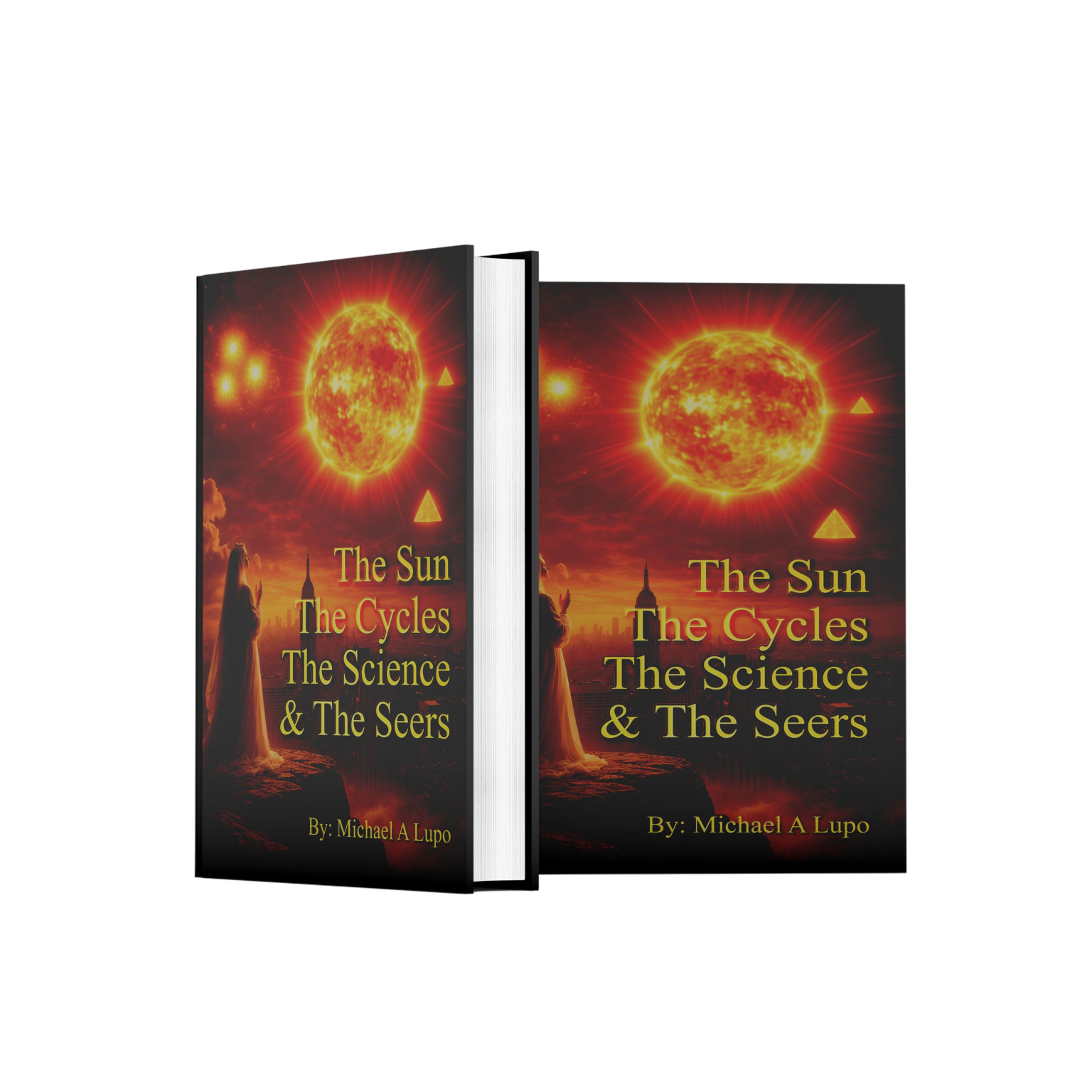
If you desire a starting point to greater understanding of this concept then get my book.
About the Author
More by Michael A Lupo


