


The Modern Matrix of Control: Technology, and the Reconfiguration of Power

An Alternative Look at Creed Lyrics - "Rain" from the 2009 Creed Album - Full Circle


Photo by Michael McKay on Unsplash
Courtesy; Creed.com
"Rain" by Creed from Full Circle - 2009
[Verse 1]
Can you help me out, can you lend me a hand?
It's safe to say that I'm stuck again
Trapped between this life and the light
I just can't figure out how to make it right
[Pre-Chorus]
A thousand times before
I've wondered if there's something more, something more
[Chorus]
I feel it's going to rain like this for days
So let it rain down and wash everything away
I hope that tomorrow the sun will shine
With every tomorrow comes another life
I feel it's going to rain, for days and days
(I feel it's going to rain)
[Verse 2]
I've tried to figure out, I can't understand
What it means to be whole again
Trapped between the truth and the consequence
Nothing's real, nothing's making sense
[Pre-Chorus]
A thousand times before
I've wondered if there's something more, something more
[Chorus]
I feel it's going to rain like this for days
So let it rain down and wash everything away
I hope that tomorrow the sun will shine
I feel it's going to rain like this, rain like this, rain like this
[Bridge]
Fall down, wash away my yesterdays
Fall down, so let the rain fall down on me
[Chorus]
I feel it's going to rain like this for days
Let it rain down and wash everything away
I hope that tomorrow the sun will shine
I feel it's going to rain like this, rain like this
[Outro]
(So let the rain fall down)
I feel it's going to rain like this, rain like this
(So let the rain fall down)
I feel it's going to rain like this
I feel it's going to rain
Courtesy; Creed.com
Rain, Grace, and Psychological Wholeness: Spiritual Awakening
The lyrics from the son Rain portray spiritual awakening as a movement from confusion and fragmentation toward renewal. The song begins in a condition of paralysis, “stuck again” and “trapped between this life and the light.” This language suggests both spiritual alienation and psychological disorientation. Yet the song does not present awakening as a sudden intellectual discovery. Instead, transformation arrives through surrender to an external and internal force symbolized by rain. The repeated request to “let it rain down and wash everything away” can be interpreted in two complementary ways: biblically, as an experience of grace that cleanses and restores the individual; and in Jungian psychology, as a process of rebalancing in which unconscious material is integrated into a more whole personality.
The song’s central movement is therefore from estrangement to renewal. The song lyrics do not claim to have solved the crisis. Rather, the words are admiting to uncertainty, asks for help, and hopes that “tomorrow the sun will shine.” This combination of helplessness, openness, and expectation makes the lyrics especially suitable for a theological and Jungian interpretation.
Awakening is Biblical Grace
In a biblical sense, grace is commonly understood as an unearned gift from God. It is not achieved through intellectual mastery or moral perfection; it is received by a person who recognizes the limits of self-sufficiency. The opening question; “Can you help me out, can you lend me a hand?”, places the speaker in precisely this position. The speaker is unable to escape the condition of being “stuck” and cannot “figure out how to make it right.” The language conveys dependence. Spiritual transformation begins when the individual acknowledges that personal effort alone has not produced wholeness.
The phrase “trapped between this life and the light” reinforces the biblical distinction between darkness and illumination. In Christian Scripture, light frequently symbolizes divine presence, truth, salvation, and renewed life. The Gospel of John, for example, associates light with divine revelation and life (New Revised Standard Version Bible, 1989/2021, John 1:4–5). The song is not entirely lost in darkness; rather, the words express existing between darkness and light. This intermediate state resembles the spiritual condition of a person awakening to the possibility of redemption but not yet fully experiencing it.
The repeated image of rain develops this theology of grace. The song does not merely observe the rain; the words are asking for it to fall: “So let it rain down and wash everything away.” Water has a powerful biblical association with purification, judgment, rebirth, and covenant renewal. In the Christian tradition, baptism expresses death to an old way of life and entrance into new life (Romans 6:3–4). Similarly, the rain in the lyrics represents a cleansing force capable of removing the burden of the past. The bridge intensifies this request: “Fall down, wash away my yesterdays.” “Yesterdays” suggests guilt, regret, failed attempts, and an identity formed by previous suffering. The lyrics here express a longing not simply to remember the past differently but to be released from its power.
This transformation is gracious because it is represented as something received rather than manufactured. The song does not say, “I will wash everything away.” Instead, the lyrics are asking that the rain perform the washing. The distinction is significant. The rain functions as an image of divine action, an agency beyond the human limited understanding. In the biblical imagination, renewal often comes through God’s initiative. The prophet Isaiah describes God’s word as rain that waters the earth and enables it to produce life (Isaiah 55:10–11). In this sense, the rain does not merely erase; it prepares the ground for new growth.
The song also connects cleansing with resurrection-like renewal. “With every tomorrow comes another life” presents each new day as an opportunity for transformation. This does not necessarily mean that one becomes a completely different person. Rather, grace makes possible a new relationship to life. The biblical concept of renewal involves the restoration of the person rather than the annihilation of the person. The old self is not simply discarded; it is redeemed and reoriented. The darkness of the present may therefore become the setting in which a new life emerges.
The hope that “tomorrow the sun will shine” completes the biblical symbolism. Rain is painful and oppressive when it continues “for days and days,” but it is also necessary for renewal. The sun following the rain suggests resurrection, revelation, and restored communion. Importantly, the hope is expressed before the transformation is visibly complete. The song believes in the possibility of light while still experiencing the storm. This is consistent with faith as trust in a reality not yet fully seen.
Awakening is Jungian Rebalancing
The lyrics can also be read through Carl Jung’s concept of individuation. Individuation is the lifelong process by which a person becomes more psychologically whole through the integration of conscious and unconscious aspects of the personality. Jung did not define wholeness as perfection or the elimination of conflict. Instead, psychological health requires a meaningful relationship between opposing dimensions of the psyche, including consciousness and the unconscious, rationality and emotion, social identity and hidden desire. Contemporary explanations of Jung’s theory similarly emphasize that individuation involves integrating unconscious contents into consciousness and moving toward a more complete personality.
The lyric's repeated statements of confusion; “I can’t figure out,” “I’ve tried to figure out,” and “Nothing’s real, nothing’s making sense” all suggest a breakdown in the conscious ego’s ability to control experience. The speaker attempts to understand the crisis intellectually but cannot resolve it through analysis alone. From a Jungian perspective, this failure may signal that unconscious material is pressing into consciousness. The ego’s familiar structures no longer provide an adequate explanation of life. The resulting experience is disorientation, but it may also be the beginning of transformation.
The line “What it means to be whole again” directly echoes the Jungian concern with psychic wholeness. The word “again” implies that wholeness has been lost or divided. The song illuminates experiences as an internal split between “truth and consequence,” just as the first verse describes being caught between “this life and the light.” These oppositions can be interpreted psychologically. The words may be expressing a division between the life actually being lived and the life desired, between moral awareness and its consequences, or between the conscious persona and rejected aspects of the self.
Jung’s concept of the shadow is particularly relevant here. The shadow contains aspects of the personality that the conscious ego rejects, represses, or fails to recognize. Although the lyrics do not explicitly name a shadow, their language of being washed clean can be understood as the desire to confront and release buried guilt, shame, grief, or regret. The “yesterdays” represent not merely external events but psychic residues that continue to influence the present. The rain symbolizes the emotional and symbolic encounter through which these materials may be brought into awareness.
From this perspective, cleansing should not be interpreted as the total destruction of the past. Jungian integration differs from simple purification. The goal is not to eliminate unwanted parts of the self but to recognize their meaning and place within the larger personality. If the rain “washes away” the past, it does so symbolically: it loosens the past’s destructive hold and allows one to relate to it differently. Psychological transformation occurs when previously rejected experiences become part of a more conscious and balanced identity.
The rain itself functions as an archetypal symbol. Water commonly represents the unconscious because it is deep, fluid, and difficult for the rational ego to control. Rain descends from above but enters the earth below, linking the visible world with hidden depths. In the lyrics, the rain comes down upon the humanity and penetrates the landscape of memory. It therefore represents an encounter with psychic material that one cannot fully command. Jung associated symbolic transformation with the interaction between conscious awareness and unconscious processes. In his discussion of religious and alchemical imagery, water can represent a medium through which the psyche undergoes change and receives new life (Jung, 1953–1979).
The repeated chorus also reflects the cyclical nature of individuation. We do not experience a single, completed moment of awakening. The rain returns repeatedly: “for days and days.” The repetition suggests that psychological integration is gradual. The same questions arise “a thousand times before,” indicating that the crisis is part of an ongoing process rather than an isolated event. The individual repeatedly encounters uncertainty, revisits old patterns, and searches for a deeper center.
The hope of sunlight can likewise be understood in Jungian terms. The sun often represents consciousness, vitality, and the integrating center of the psyche. However, the lyrics do not present sunlight as a denial of rain. The sun becomes possible because the rain has entered the process of transformation. The psyche is not made whole by avoiding darkness but by moving through it. Jung’s psychology emphasizes that growth requires a conscious encounter with what has been neglected or rejected. Thus, the song’s movement from rain to sunlight is not an escape from the unconscious; it is the emergence of a new consciousness after engagement with it.
Grace and Rebalancing Together
Although biblical grace and Jungian rebalancing arise from different intellectual traditions, the two interpretations illuminate one another. The biblical reading emphasizes that transformation is received as a gift from beyond the isolated self. The Jungian reading emphasizes the inner psychological work through which fragmented aspects of the personality become integrated. In the lyrics, these dimensions are not mutually exclusive. The rain is both something that comes upon us and something that changes the us from within.
The lyric's plea for help resembles prayer, while the language of being “whole again” resembles the psychological desire for integration. The song therefore presents awakening as both surrender and participation. The individual cannot force the rain to fall, but the individual can consent to it: “So let the rain fall down on me.” This line is crucial because it transforms passive suffering into willing receptivity. We do not merely endure the storm of life; we must learn to accept the possible cleansing and transformative power of the storms that we encounter.
In theological terms, this acceptance resembles openness to grace. In Jungian terms, it resembles the ego’s willingness to enter into relationship with the unconscious rather than defend itself against it. Both interpretations challenge the fantasy of self-sufficiency. To change, we must admit confusion, accept vulnerability, and allow a power larger than the conscious ego to participate in the process of renewal.
The song also complicates the idea that awakening is pleasant. The rain is associated with heaviness, repetition, and uncertainty. Spiritual and psychological transformation may initially feel like crisis rather than illumination. The song wants the storm to end, but also asks that it continue its cleansing work. This ambivalence reflects the difficulty of genuine change: the old identity is painful, but it is familiar; the new identity is hopeful, but not yet known.
Ultimately, the lyrics describe awakening as a passage through liminality. The speaker stands between darkness and light, truth and consequence, rain and sunlight, old life and new life. Biblical grace interprets this threshold as the place where divine cleansing and renewal become possible. Jungian psychology interprets it as the stage at which unconscious material disrupts the old ego structure and initiates individuation. In both readings, the storm is not meaningless. It is the medium through which transformation occurs.
Conclusion
The song Rain presents spiritual awakening as a movement from fragmentation toward renewal. Its biblical imagery portrays rain as grace: an undeserved cleansing power that washes away the burden of the past and opens the possibility of new life. Its Jungian symbolism portrays the same rain as rebalancing: an encounter with the unconscious that allows the speaker to move toward psychological wholeness.
The song’s most important insight is that awakening does not begin with certainty. It begins with the admission, “I can’t figure out how to make it right.” The confusion shown in the lyrics becomes the condition of receptivity. By asking for the rain to fall, the song accepts both the pain of transformation and the possibility of renewal. Grace and individuation therefore converge in the song’s central image: the rain descends from beyond the self, yet it transforms the self from within. When the rain has done its work, the promised sunlight represents not an escape from suffering but the emergence of a new way of being.
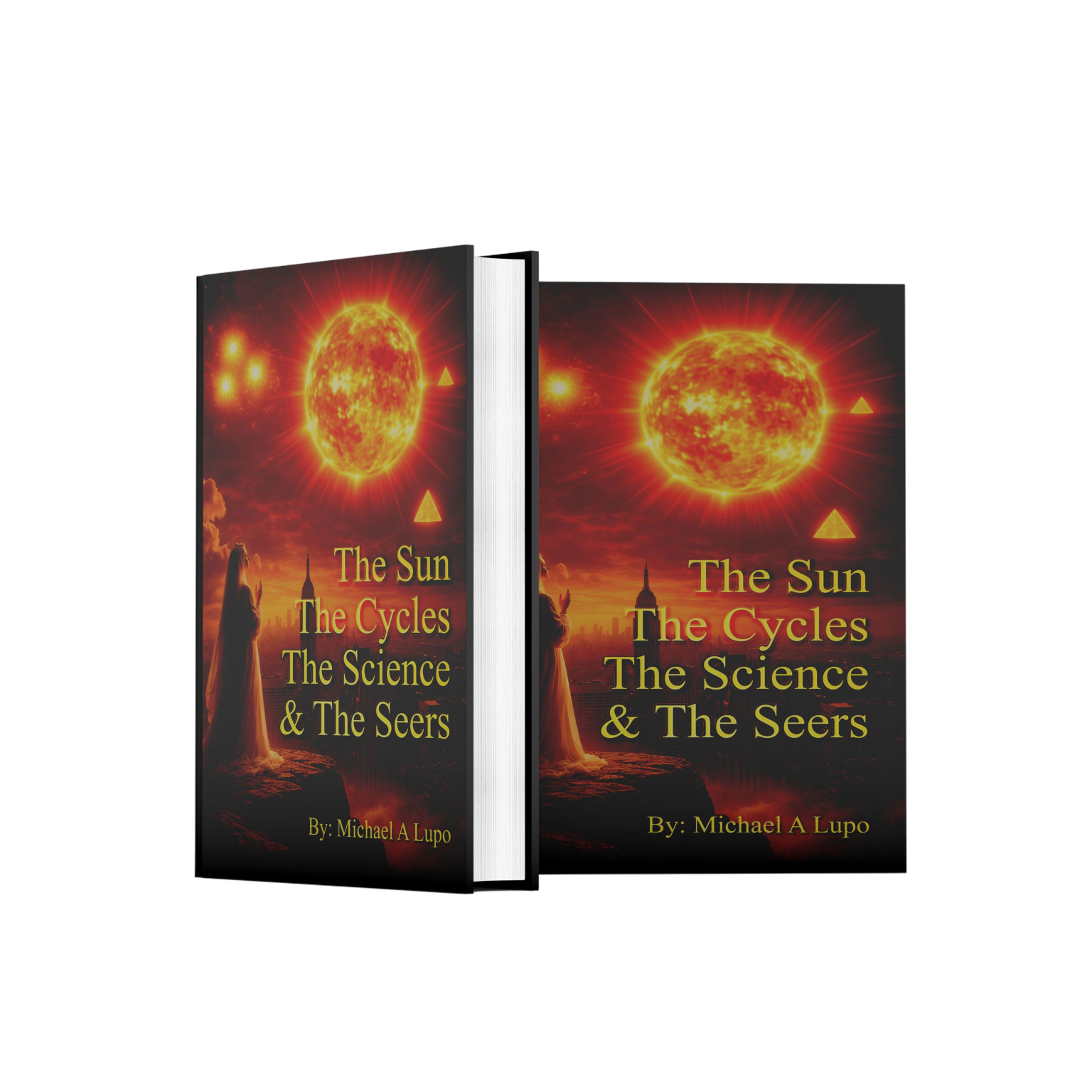
If you want transformation and not sure where to start - try this. The Sun, The Cycles, The Science & The Seers
References
The Holy Bible, New Revised Standard Version. (2021). National Council of Churches. (Original work published 1989)
Jung, C. G. (1953–1979). The collected works of C. G. Jung (H. Read, M. Fordham, G. Adler, & W. McGuire, Eds., Vols. 1–20). Princeton University Press.
Jung, C. G. (1958). Psychology and religion: West and East (R. F. C. Hull, Trans.). Princeton University Press. (Original work published 1938)
Jung, C. G. (1966). Two essays on analytical psychology (R. F. C. Hull, Trans.; 2nd ed.). Princeton University Press. (Original work published 1928)
Jung, C. G. (1968). The archetypes and the collective unconscious (R. F. C. Hull, Trans.; 2nd ed.). Princeton University Press. (Original work published 1959)
Jung, C. G. (1971). Psychological types (R. F. C. Hull, Trans.). Princeton University Press. (Original work published 1921)
About the Author
More by Michael A Lupo


