Sunsets to Sunrise

Protecting the Prayers that Protect Us: A Fraternal Correction for Knoxville & Elsewhere
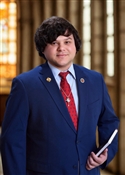

Photo by Shutter Speed on Unsplash
Protecting the Prayers that Protect Us: A Fraternal Correction for Knoxville & Elsewhere
By Professor Anthony Maranise, Obl.S.B.
Bishop Mark Beckman of Knoxville has used the pages of his diocesan newspaper to instruct priests to catechize the faithful away from the communal recitation of the Prayer to St. Michael and other traditional prayers immediately before or after Mass. The column, published October 16, 2026, treats these long-permitted practices as obstacles to “the mind of the Church” and as additions that pastors should not allow on their own. The counsel is as unwelcome as the article that contains it.
In recent essays I have examined the risks of precisely this form of over-correction. In “Concerning the Places where Behavioral Science Meets Theology & Spirituality” (Catholic365, May 19, 2026), I noted that the Church rightly rejects the excesses of earlier ages, yet the opposite error is equally real: the modern habit of reducing every sign of spiritual distress to a psychiatric or psychosomatic cause. That reduction plays into the hands of the one Christ called “the father of lies.” In “On the Alarming Trend of Dismissing Personified Evil as Myth” (Catholic365, August 26, 2026), I observed that the enemy is opportunistic and that Catholic anthropology has never required an exclusive either/or. Natural vulnerabilities and diabolical influence can coexist. Once a natural diagnosis is named, the spiritual dimension is not thereby closed.
Bishop Beckman’s directive does the opposite of what prudence requires. It discourages the very prayer Pope Leo XIII composed after a vision of the assault upon the Church, a prayer St. John Paul II later urged the faithful to retain. The Mass ends with the dismissal. Those who remain to invoke St. Michael are not inserting material into the liturgy; they are continuing, in a manner long allowed, a spiritual battle the Church has never declared finished. To instruct priests to move the people away from this practice is to leave the flock more exposed to the attacks of the evil one. One is left to ask whether that exposure has already found a foothold closer to the center of pastoral authority.
Such guidance calls for “fraternal correction”. The Catechism of the Catholic Church teaches that charity demands beneficence and fraternal correction (cf. 1829), and that the moral life of Christians is sustained by the gifts of the Holy Spirit, which form permanent dispositions making us docile to His promptings (1832–1833). “Fraternal correction” is not reserved to the ordained. As the Catholic Encyclopedia explains, it is the admonishing of one’s neighbor for the purpose of reforming him, an act of charity that belongs to anyone who possesses charity, whether subject or prelate. It can—and in cases such as this, should—come from those the hierarchy may regard as the mere lowly faithful, including a lay theologian. The obligation to speak when the faithful are left more vulnerable is not limited by ordination.
The Church’s tradition has long held that the sacrament of Reconciliation is more powerful than any exorcism. If the burdens of a new episcopal appointment, the pressures of governance, or the influence of those who minimize personified evil have clouded judgment, the confessional remains open. Spiritual direction remains available as well. A bishop who finds himself urging the suppression of a prayer composed for the Church’s defense would do well to examine, with a prudent guide, whether the weight of the office has become too great to bear alone, and whether amendment of the guidance given to priests and people is the more prudent course.
The treasury of prayer belongs to the faithful as much as to the hierarchy. The Prayer to St. Michael is not an optional ornament. It is a recognized weapon in spiritual warfare the Church continues to wage. The directive issued in Knoxville should be withdrawn, as should any similar restriction wherever in the global Catholic Church the faithful seek, through devout prayer, the spiritual, emotional, physical, and mental protection that God Himself provides. One would think a bishop would know better.
About the Author