Tattoos & the Transmission of Faith

Playing Right into the Wrong Hands: American Bishops and their Naiveté Regarding the Reality of Evil
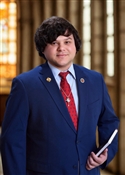

Photo by Michal Mikulec on Unsplash
Playing Right into the Wrong Hands
American Bishops and their Naiveté Regarding the Reality of Evil
By Prof. Anthony Maranise, Obl.S.B.
In June, Cardinal Robert McElroy removed Monsignor Stephen Rossetti as exorcist of the Archdiocese of Washington. Rossetti had said, in a personal capacity, that many UFO sightings are likely demonic. McElroy’s stated reason was that such statements “gravely undermine the Church’s very precise teaching on the devil, demons and exorcism.” Five weeks later he clarified that the issue had never been about UFOs; an exorcist’s ministry, in his view, ought to remain private. Rossetti asked forgiveness for any lapse and continued his work elsewhere. The St. Michael Center lost its archdiocesan affiliation.
Three days ago, Bishop Mark Beckman of Knoxville directed priests to catechize the faithful away from communal prayers recited immediately before or after Mass—the Prayer to St. Michael among them—citing “noble simplicity” from Sacrosanctum Concilium, which I should take the time to remind all the faithful, is not a dogmatic teaching. Thus, the faithful are not required to believe in, subscribe to, or follow what it outlines. The same goes for all the documents of Vatican II. Nothing from that Council binds the faithful to required adherence under penalty of sin.
But, I digress: the Mass ends at the dismissal. What the faithful pray after “Go in peace” is not liturgy; it is devotion. One year earlier, Beckman had already restricted the Traditional Latin Mass in his diocese to a single monthly celebration in a retreat-center chapel. Now the prayer composed by Pope Leo XIII after a vision of the assault upon the Church is being set aside as well.
And today, October nineteenth, Archbishop James Golka of Denver—himself a trained exorcist, formed at the Pope Leo XIII Institute—asked Father Chad Ripperger to consider a one-year fast from public speaking, preaching, writing, and online homilies. Ripperger’s own account was direct: “The Archbishop has asked me to take a break on public speaking.” The archdiocese’s statement indicates that Ripperger “readily agreed.” The same morning, however, Denver’s clergy directory listed Ripperger as retired. That designation was removed within hours of a screenshot being posted. A mutual arrangement does not ordinarily require such rapid correction of the public record.
For those keeping score (as I am), that’s three decisions in four months surrounding a similar profile: public, traditional, and unapologetic about the reality of the devil.
I am not asserting that a memorandum exists or that a meeting occurred in Rome. Pattern recognition is not conspiracy. It is what responsible adults do when discrete events converge upon the same subject without a shared explanation having been offered. McElroy removed an exorcist for speaking of demons. Beckman directed priests to move the people away from a prayer against demons said after Mass has concluded. Golka removed from public ministry the most widely heard American voice on the reality of the demonic. In none of these instances was the underlying theology engaged. The men were simply removed from view.
However, the Church’s tradition (not to mention, our theology) is not silent.
Pope Leo XIII, after his vision, gave the faithful a prayer and instructed them to use it. St. John Paul II later urged that it be retained. The Church’s own rite of exorcism presupposes that the devil is real, active, and opposed to the salvation of souls—not a metaphor. When a cardinal states that an exorcist’s public ministry “gravely undermines” the Church’s teaching on the devil, he is either correcting error or suppressing a legitimate expression of that teaching. He did not specify which. When a bishop invokes noble simplicity against a prayer recited after the dismissal, he is either safeguarding the rite or diminishing the spiritual resources available to the faithful. He did not specify which. When an archbishop who studied at the Pope Leo XIII Institute restricts the public ministry of the priest most closely associated with that institute’s work, he is either exercising prudential oversight or acting upon some other consideration. He did not specify which.
The faithful are entitled to clarity. Silence is not an explanation. A one-year review is not an explanation. The temporary appearance and subsequent removal of a “retired” designation is not an explanation.
The practical result, irrespective of intent, is measurable. The Church in the United States is quieter about the reality of evil than she was in June. Fewer exorcists are speaking publicly. Fewer communities are praying the Prayer to St. Michael after Mass. Fewer voices are naming what the Church’s own rite continues to name. If the devil is real—and the Church’s doctrine, liturgy, and two millennia of practice affirm that he is—then reducing the public capacity of those charged with resisting him is not a neutral administrative decision. It is a strategic advantage granted to the one the Church calls the father of lies, whether those who issued the directives intended it as such.
Cui prodest? It is most certainly not the faithful who lose both a prayer and a teacher. Not the liturgy, which was never altered. Not the priests, who must now explain to their congregations why a longstanding devotion has been set aside. The only party served by the removal of prayers against the evil one, the restriction of exorcists, and the silencing of the most prominent deliverance priest in the country is the one against whom those prayers and ministries were directed.
I pen this as a theologian, and as one who has already addressed related matters in these pages. I do not claim insight into the interior dispositions of any bishop. The pattern, however, is visible. The cost is being borne by the people in the pews who continue to believe that the devil is real and who continue to desire the means the Church has historically provided for resisting him.
The Prayer to St. Michael was issued for the Church’s defense – obviously chiefly included in the term “Church” is not the institution itself, but the mystical Body of Christ; that is, the faithful people who comprise it. Monsignor Rossetti’s ministry and Father Ripperger’s public voice belong to the same order of concern.
If the hierarchy cannot or will not restore them, then the faithful should remember to whom the prayer belongs — each one of us, the faithful – and, perhaps most importantly, who it helps to defeat.
About the Author